One of our first production Datsun 240Z body shells is aboard a ship, heading to Finland. The customer ordered when we had a complete prototype but were not yet ready for production. He paid his deposit anyway. Roughly six months of development stood between that decision and the body we could finally send him.
The photographs below show his assembled body before packing. This is a replacement body assembly for a restoration project, not a finished, road-ready car. The empty window openings and unfinished interior make that distinction clear.
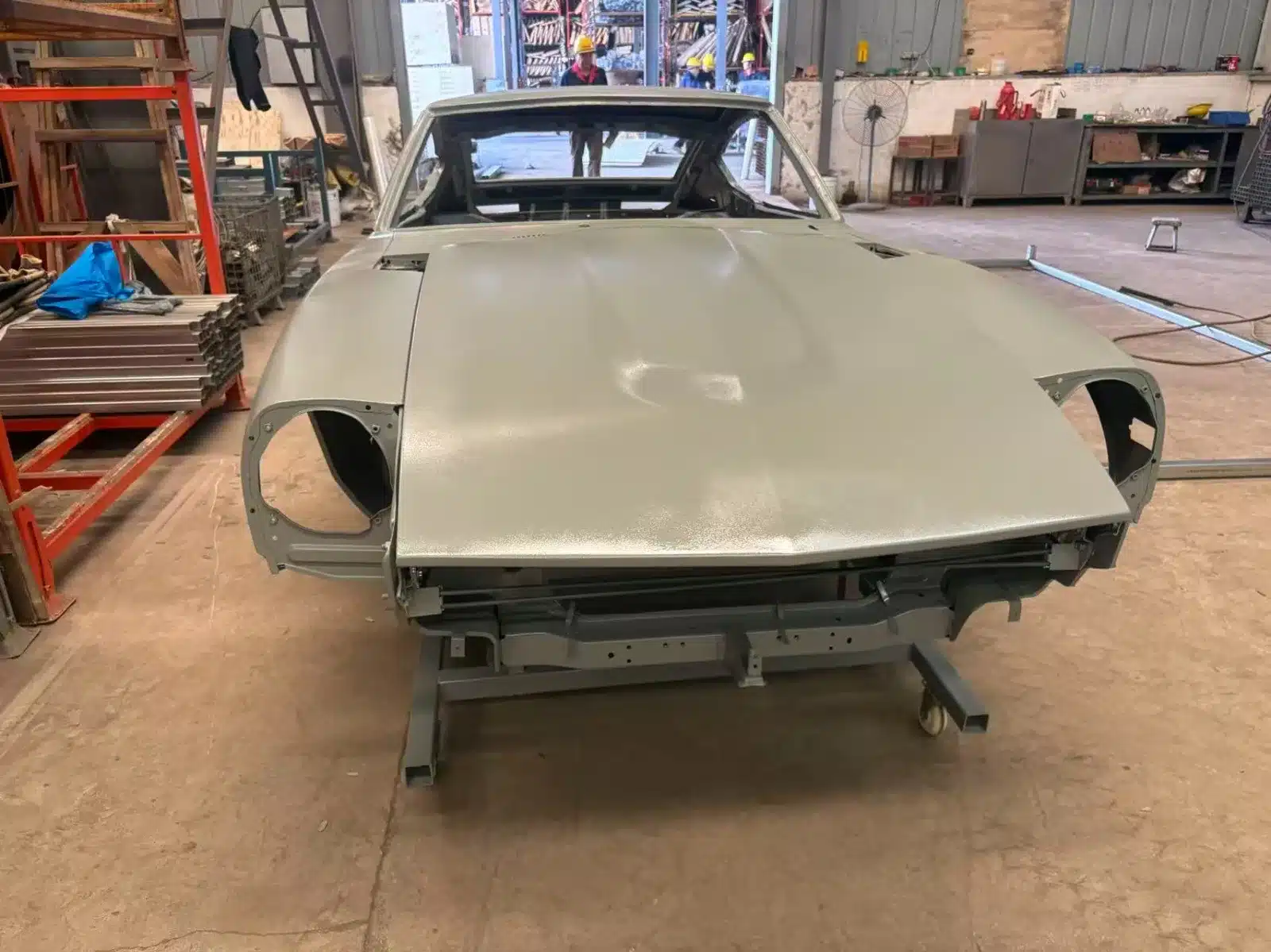
He ordered before we were ready for production
When we announced the presale, this Finnish customer was among the first to contact us. Making a complete prototype was one milestone. Being able to build bodies for customers was another, and there was still refinement and verification ahead.
When production was finally ready, we thought of him immediately and put his order among the first deliveries. Once we sent the ready-to-ship notice, he promptly paid the balance.
The donor car that sent us back to the beginning
We bought what we understood to be a complete 240Z as our reference car. After developing its individual components, we thought that part of the job was done. We even celebrated.
Then some details began to look wrong. We dismantled the car further and compared what we found. It contained a mixture of 240Z, 260Z and 280Z parts. We had bought a bit of a Frankenstein Z.
It is easier to laugh about that now. At the time, it meant questioning work we had already considered finished.
We decided to start again. We bought a genuine 240Z, stripped it down and returned to developing the body assembly. It meant more work, but we did not want to keep building from a reference car we no longer trusted.
Nissan’s motorsports catalogue identifies the 240Z, 260Z and 280Z separately within the S30 family. That shared family name does not tell you whether a particular shell, panel or fitting is right for your restoration. On a decades-old car, past repairs and modifications deserve a close look too.
From the assembly fixtures to a complete shell
The first video shows an assembly stage, with the floor and inner body structure still exposed on the workshop fixtures. It is a useful view of work that becomes much harder to see once the exterior panels are in place.
The finished-body photographs show the result from the front and both rear quarters. The second video takes a longer walk around the assembled shell and looks into its unfinished interior. Together, these views give a better sense of the body than a single catalogue photograph can.
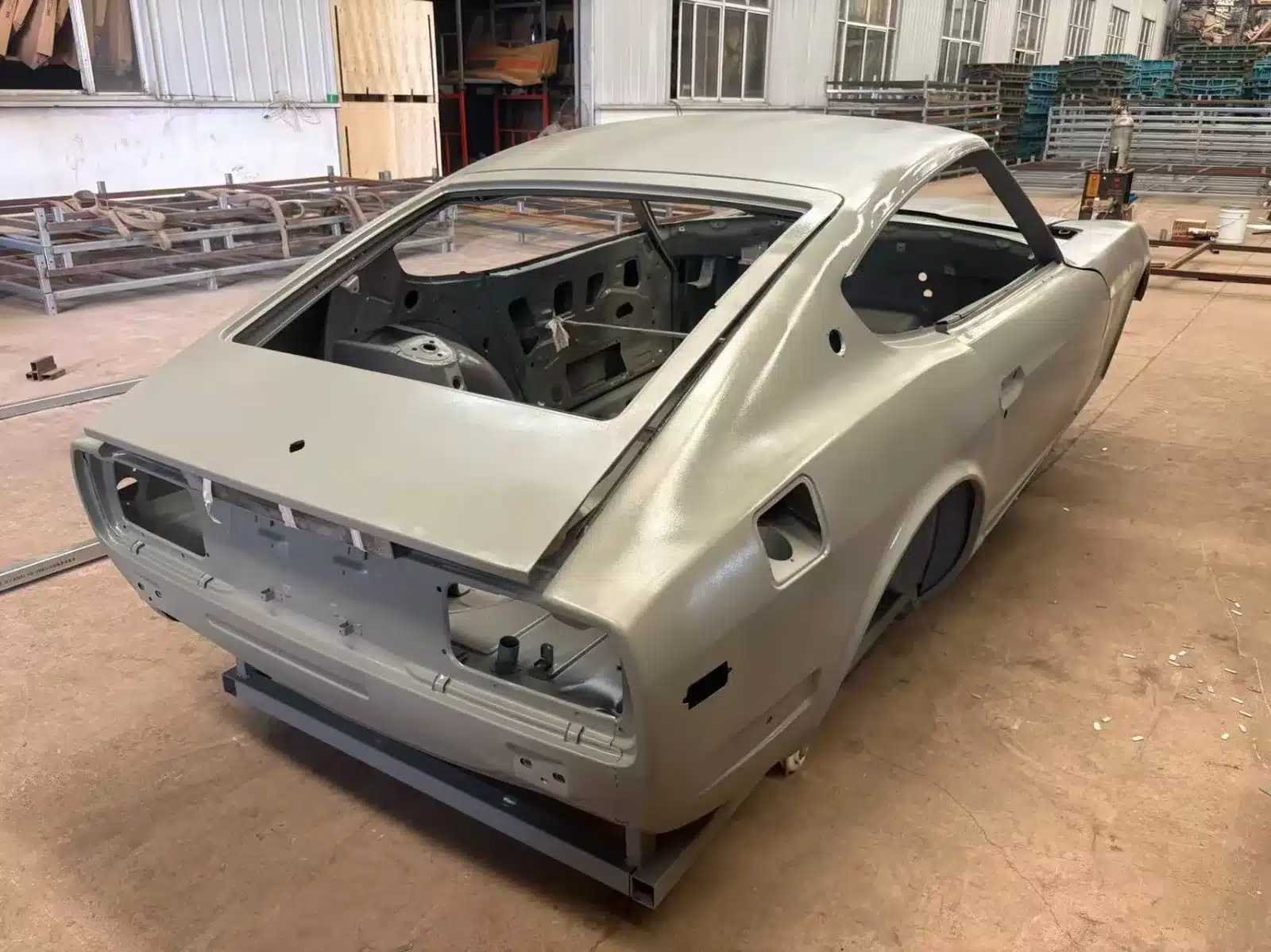
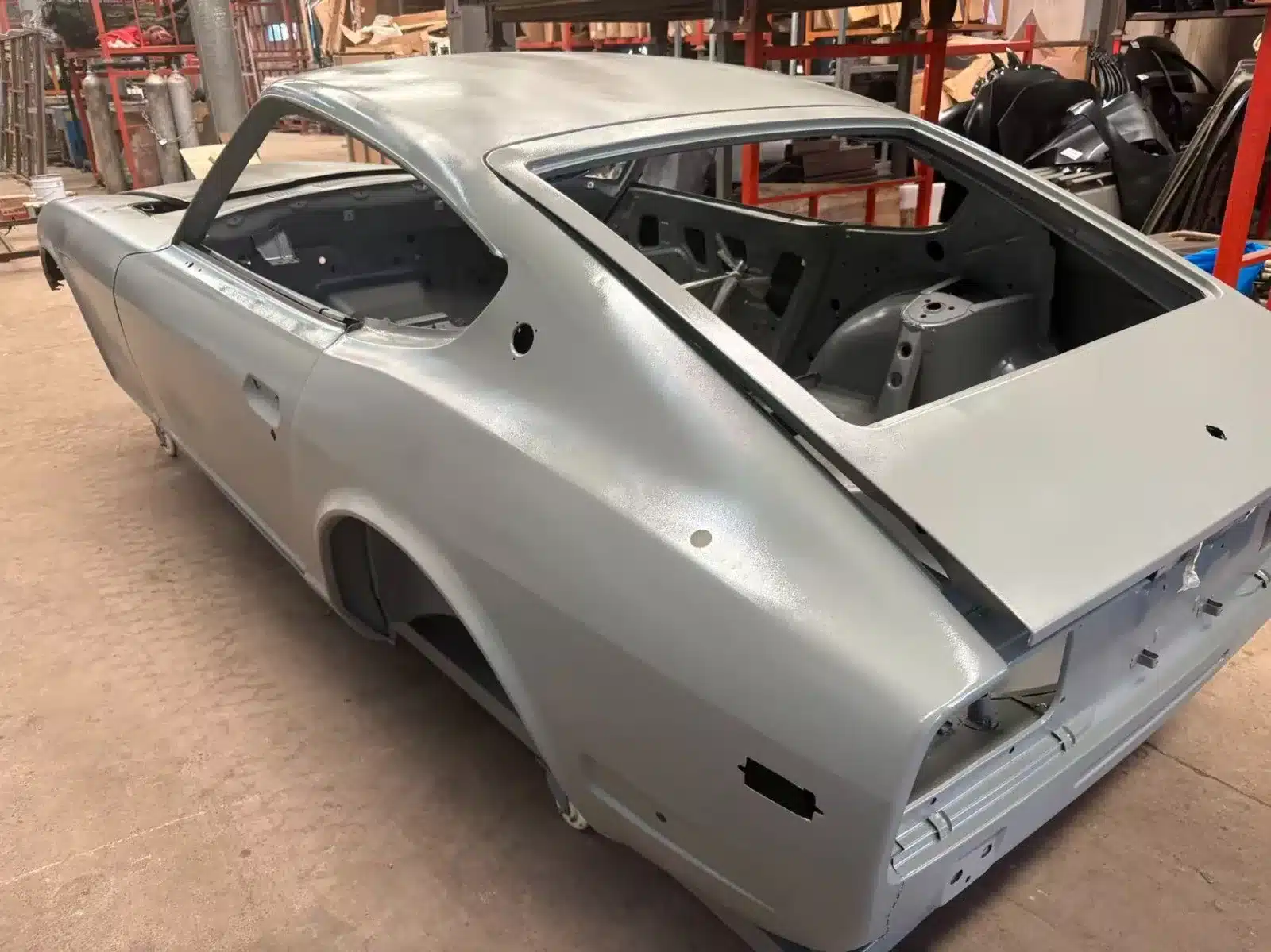
After all that development work, his body was ready to be packed.
A steel protective frame, then a closed crate
We had a steel protective frame made for this body and enclosed it for the journey. The two packing photographs show the closed outer enclosure; the protective structure inside is no longer visible.
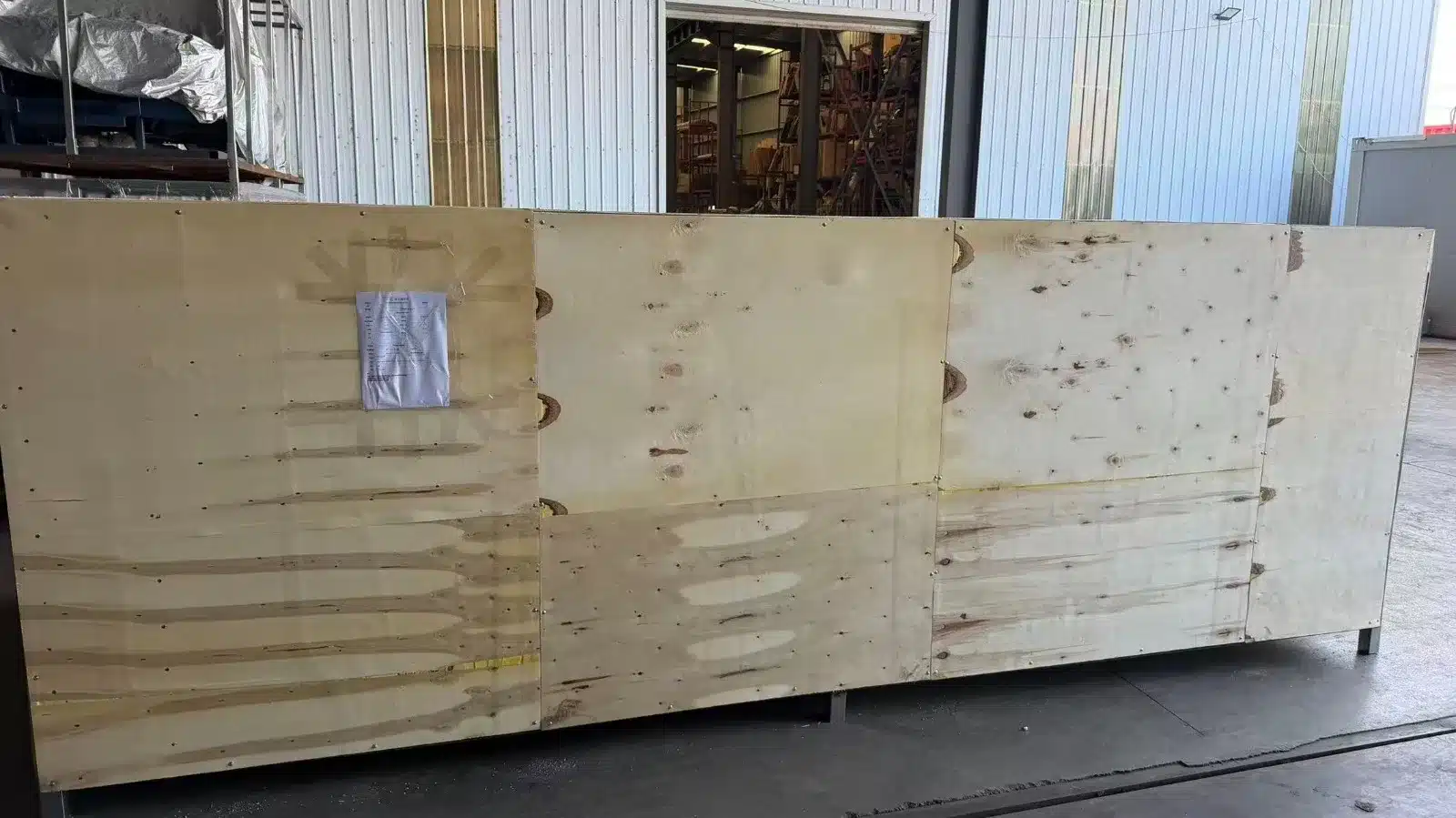
We had also arranged the customer’s container shipment about six months in advance. That early booking let us honour his original freight arrangement despite the later rise in international sea freight charges. This applied to his order; future shipments need their own confirmed arrangements.
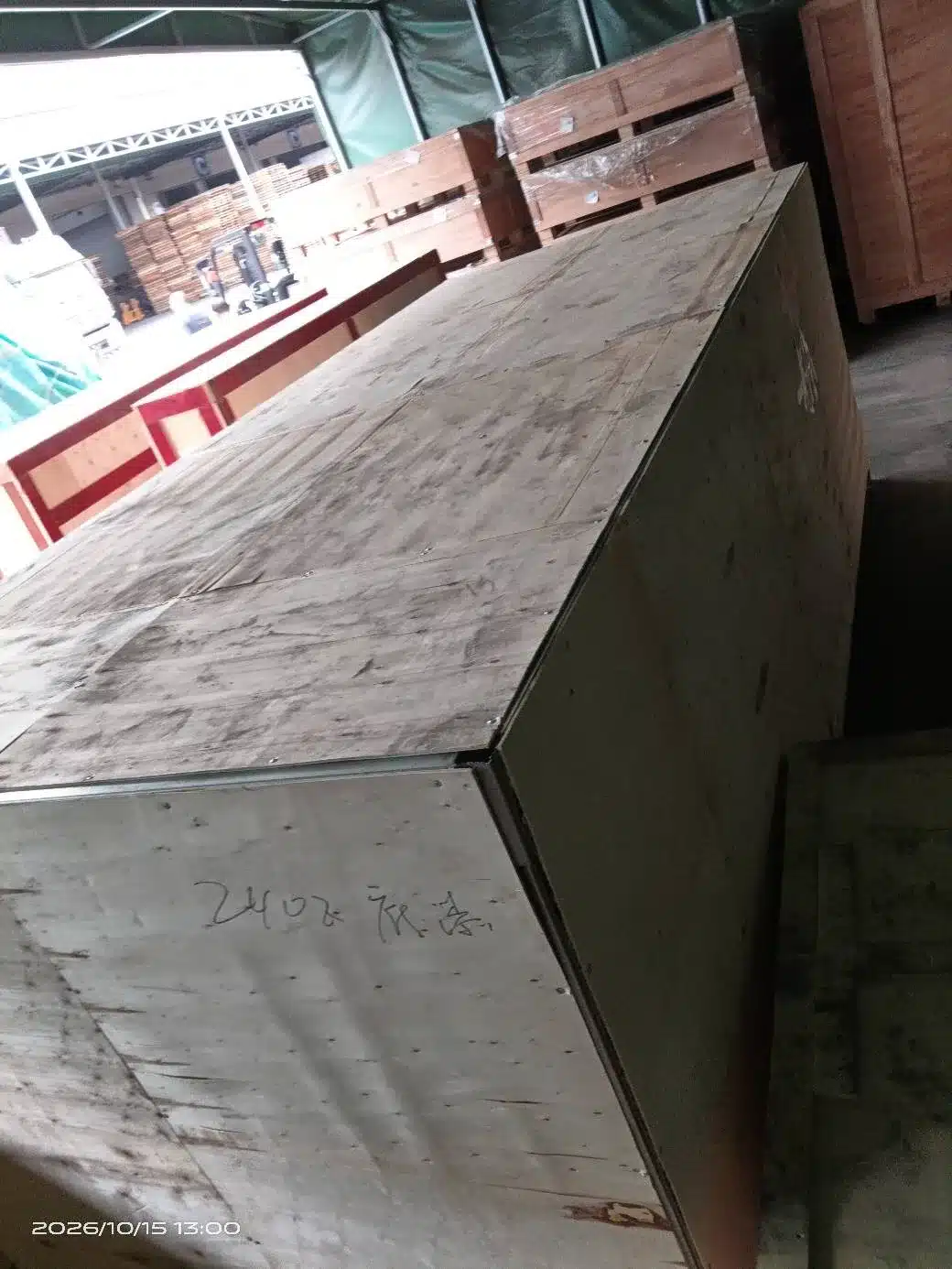
At the time of writing, the cargo is on the vessel and travelling to Finland. It has not yet arrived with the customer. We look forward to hearing from him when it does.
Planning a 240Z body-shell project of your own
Our current product listing is the Complete Car Body Assembly for Nissan Datsun 240Z, listed for 1969–1973, under SKU SYC-NS42-00. Treat that as the starting point for a conversation about your car, rather than an assurance that every early Z project needs exactly the same configuration.
Before committing to a shell, send us the car’s model year, steering layout, photographs and a description of the intended build. Agree an itemised supply list as well. A photograph of an assembled body should not be used to assume that glass, running gear, wiring, trim or every small fitting comes with the order.
For the receiving workshop, we recommend checking the body and agreed contents when it arrives, then planning trial assembly before final finishing. Door, bonnet and hatch alignment, openings, mounting points and the parts retained from the original car all need attention. Confirm the supplied surface finish and the required preparation with us; appearance alone does not identify a coating.
View the 240Z complete body assembly, or contact us with your project details and the components you intend to reuse.