Quick answer: For an otherwise standard open-top or soft-top FJ40, this half-door format is usually the best match because it keeps the upper doorway open. The Reborn-FJ product is a bare E-coated steel shell, available in separate LH and RH versions, so it must be trial-fitted with the vehicle’s actual hinges and latch hardware before paint.
If an FJ40 is being built as an open-top or soft-top truck, I would look at a steel half door before considering a full framed door. It keeps the upper opening clear and suits the simpler, open-air shape of the vehicle. The catch is that the Reborn-FJ FJ40/FJ45 half door is a bare steel shell, not a bolt-on complete door.
The current product listing covers 1968–1984 Toyota Land Cruiser FJ40 and FJ45 applications. It offers separate left-hand and right-hand shells, both in stamped steel with an E-coated finish. Hinges, latch mechanisms, interior panels, mirrors and an upper window frame are not included.
That combination makes the door a sensible starting point for many open-top FJ40 projects, but the existing body opening and the hardware you plan to reuse still decide whether the installation goes smoothly.
Why the half door suits an open-top FJ40
A full door and its upper window frame can make sense on a weather-sealed hardtop. For an otherwise standard open-top or soft-top FJ40, this half-door format is usually the best match because it leaves the upper doorway open rather than adding a fixed steel frame that the rest of the build may not need.
This is a recommendation, not a claim that every convertible FJ40 uses the same hardware. Soft tops, door surrounds, hinges and latches may have been changed during earlier restorations. At the ordering stage, compare the vehicle’s present door opening and hardware with the product photos. If the truck has been repaired or modified, send measurements and clear photos to the seller rather than relying on the FJ40 badge alone.
FJ45 owners should make the same check. The product page lists both FJ40 and FJ45 fitment, but FJ45 body and cab configurations vary, so the physical opening matters more than the model name.
The two door options confirmed by the listing
Both variations are listed for 1968–1984 FJ40/FJ45 applications in stamped steel with an E-coated finish.
| Vehicle side | Variation SKU | Availability when checked |
|---|---|---|
| LH | SYC-TY65-01L-1 | In stock on August 22, 2026 |
| RH | SYC-TY65-01R-1 | In stock on August 22, 2026 |
The listing shows each shell at approximately 95 × 80 × 12 cm and 18 kg. Those figures are useful for packing and handling, but they do not replace a trial fit on the vehicle.
LH/RH check: choose by the physical side of the vehicle, not by the words “driver side” or “passenger side.” Those descriptions change between left-hand-drive and right-hand-drive trucks. Confirm the required side before the order is placed.
What arrives—and what still has to be planned
The E-coated shell gives the body shop a protected steel starting point for preparation and paint. The product page does not list the following pieces as included:
- hinges;
- latch and lock mechanisms;
- interior trim panels;
- mirror;
- upper window frame assembly.
That is not a minor detail. Make an inventory of the original door before removing it, especially if the plan is to transfer hardware. Rusted fasteners, worn hinges and an altered striker can turn a straightforward panel replacement into a larger repair. If the old hardware is incomplete, identify replacements before the new shell goes to paint.
Trial-fit the shell before bodywork and paint
The useful installation work happens before the finish is applied. Support the shell securely, install the hinges and latch hardware provisionally, and check the door in the actual body opening. A professional body shop should inspect the hinge area, sill, pillars and striker mounting points for previous repairs or movement.
Watch the gap along the front edge, sill and rear edge as a complete system. Chasing one narrow gap can move the problem elsewhere. The latch should engage without lifting or forcing the door, and the shell should not be used to pull a distorted opening back into shape.
Only after the door opens, closes and sits correctly should the shop complete final surface preparation. Any area cut, drilled or ground during fitting needs renewed corrosion protection because that work can break the E-coat. The final seam sealing, primer and paint system should follow the body shop’s materials and process.
For a soft-top build, also check the top, side curtain or door surround at the same stage. The half door does not include an upper frame, so weather sealing depends on the rest of the soft-top system rather than the shell alone.
A pair of half doors packed for Latvia
On August 22, 2026, we sent a pair of FJ40/FJ45 half-door shells to a customer in Latvia. Because two large stamped-steel panels were travelling together, we built a wooden protective frame around the package to reduce movement and protect the door edges and surfaces in transit.
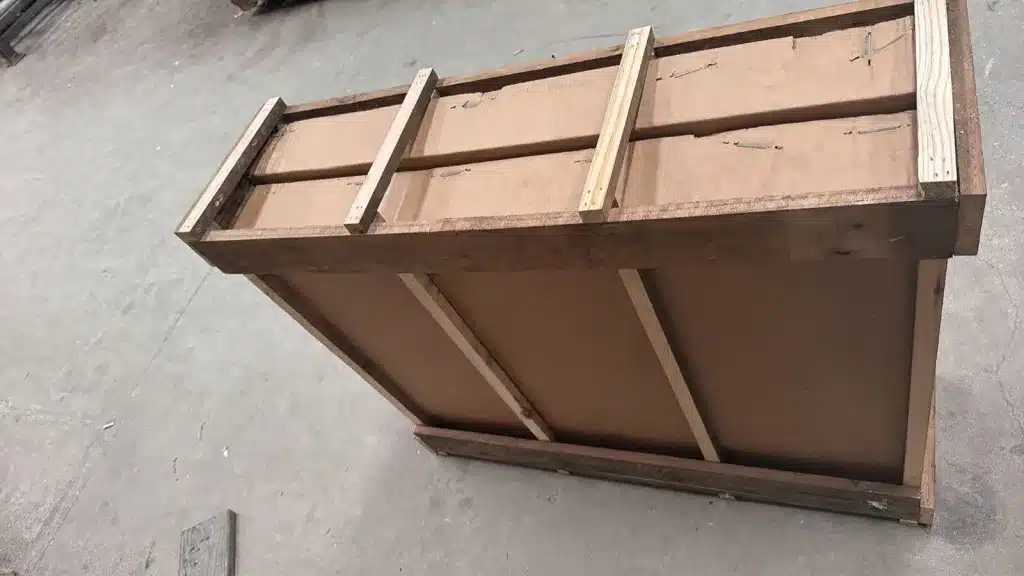
The consignment is travelling from China to Latvia by truck. For this particular shipment, truck freight was the lowest-cost route available to us. The best route can change with the part size, destination and current freight conditions, so we confirm packing and transport case by case rather than promising one method for every order.
For a paired door shipment, a strong outer frame is only part of the packing plan. The two shells also need to be kept from shifting or rubbing against each other, while their exposed edges need protection. If you are arranging international delivery, ask about the proposed packing before the parts leave the workshop.
Before ordering, settle these four points
- Confirm that the vehicle falls within the listing’s 1968–1984 FJ40/FJ45 range.
- Choose the physical LH or RH side and confirm it with a photo if the vehicle is right-hand drive.
- Decide which hinges, latch parts, trim and mirror will be reused or replaced.
- Plan for a full trial fit before primer and final paint.
For an open-top or soft-top FJ40, this is the door format I would consider first. The open upper doorway suits the vehicle, while the stamped-steel shell gives the body shop a clean base to work from. The final checks are simple: verify the physical side and the hardware you already have, then compare the product photos with the actual opening.
Related reading: FJ40 roof panel, included drip rails and installation checks